The power of being four
In conversation with Hall Haus
By Zhedy Lena Nuentsa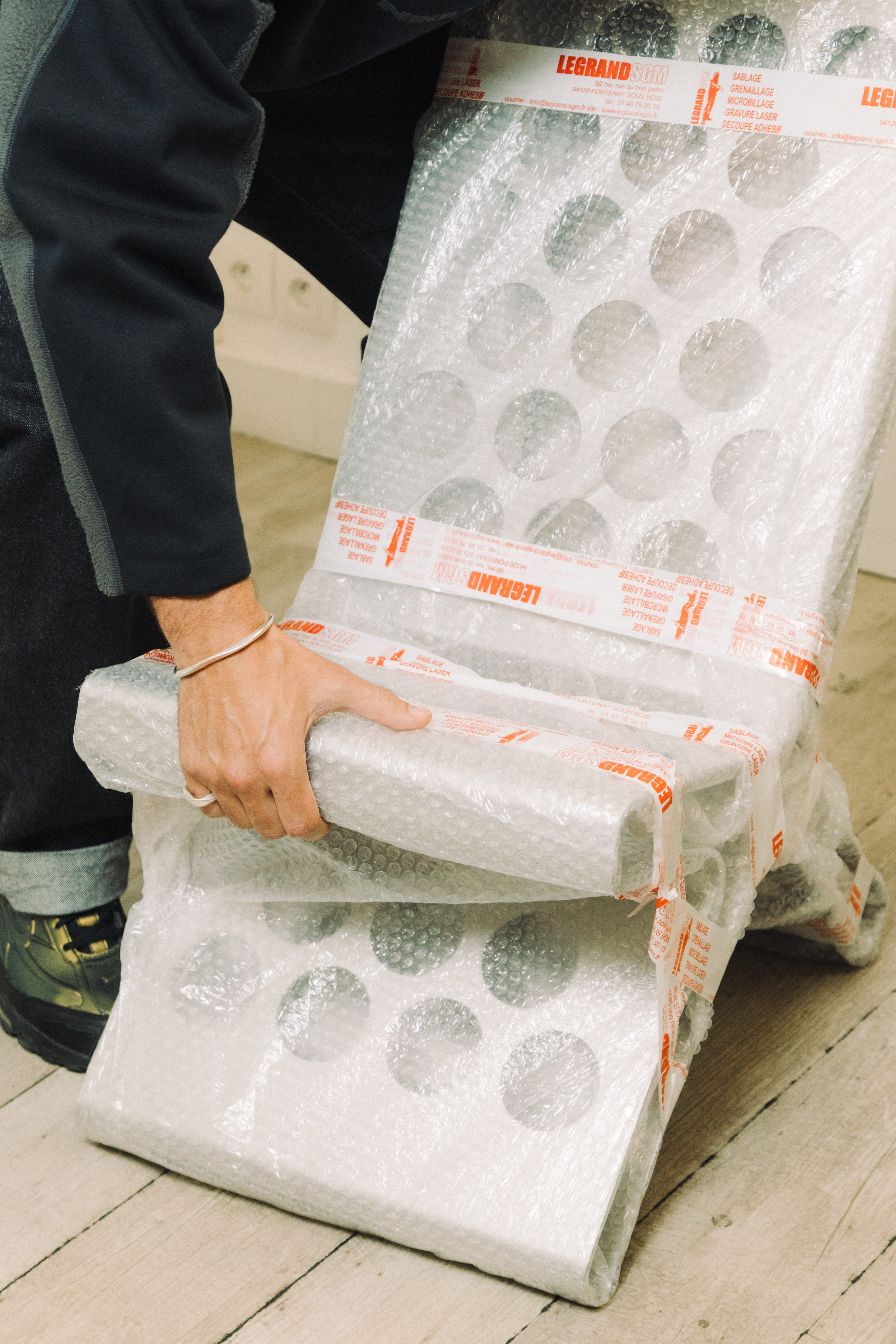
Inside their studio, the table is covered with sketches, samples, fragments of ongoing projects, and pieces from their collaboration with Jean-Charles de Castelbajac. Around it sit Zakari Boukhari, Sammy Bernoussi, Abdoulaye Niang, and Teddy Sanches. Four designers working as one collective: Hall Haus.
They speak calmly, rarely over one another, often finishing each other’s thoughts or building on what has just been said. When they talk about their practice, they do not look for a single definition. Instead, a few words keep returning: union, complementarity, power. The power of being four.
They speak calmly, rarely over one another, often finishing each other’s thoughts or building on what has just been said. When they talk about their practice, they do not look for a single definition. Instead, a few words keep returning: union, complementarity, power. The power of being four.
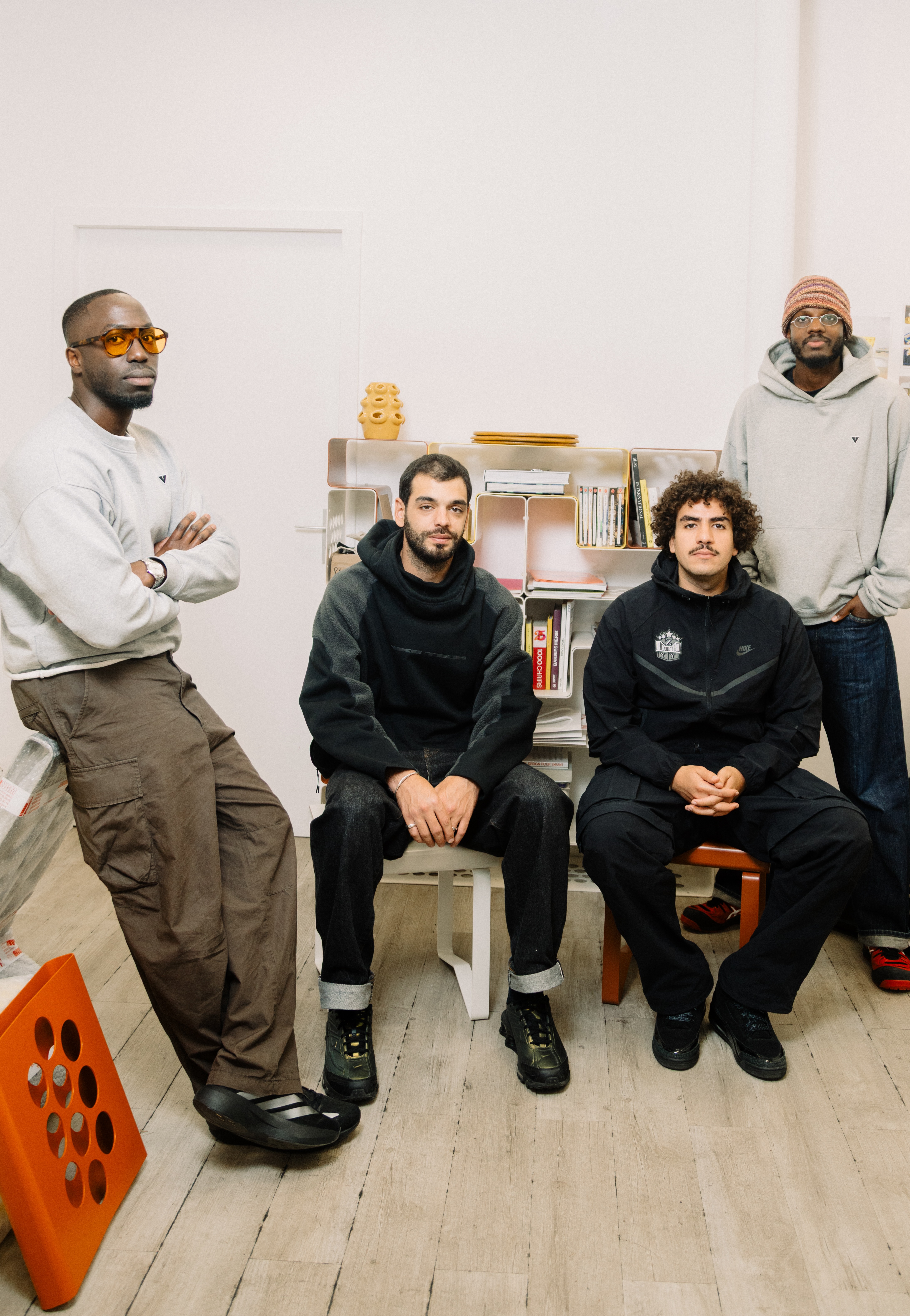
Formed in 2020, Hall Haus has become one of the more visible young collectives in French design, known for projects that combine cultural reference, material experimentation, and social attention. From the beginning, their work has been shaped by the idea that design is not a solitary act, but something that happens in conversation.
The name itself already suggests that position. In France, the hall is not just an entryway. It is the shared space of the banlieue, often the first public ground for children of immigrants, a place where conversations start, where neighbours meet, where different lives brush up against each other. The haus, borrowed from the Bauhaus, recalls the modernist idea of collective making. Between the two, Hall Haus situates its practice: moving from lived experience to design, and back again.
“At the beginning,” Sammy says, “we wanted to connect popular culture and a more elitist kind of design.” The ambition is still there, but the situation has changed. What started as an intuition, “a seed we planted without knowing what it would become,” has grown through exhibitions, collaborations, and a community that recognises itself in their work.
Zakari puts it more plainly. “At first, we launched with an identity we wanted to defend. It was seen, it was heard. Now the challenge is to make this ecosystem live, to turn those first years into something that lasts.”
Their way of working is built on trust, but also on constant adjustment. Working as four means negotiating roles, knowing when to lead and when to step back. They describe it as a balance, sometimes even as a mirror. There are things they would not necessarily do for themselves, but will do for the group. Not out of idealism, but out of responsibility.
“Hall Haus is an enterprise, not just a studio,” one of them says. “Beyond design, there is responsibility. Each of us carries a part of it.”
Over time, their voices have merged into a kind of ongoing conversation. Ideas rarely stay with one person for long. They circulate, get tested, reshaped, sometimes abandoned. It is less about individual authorship than about finding a shared rhythm, a way of working in which listening is as important as proposing.
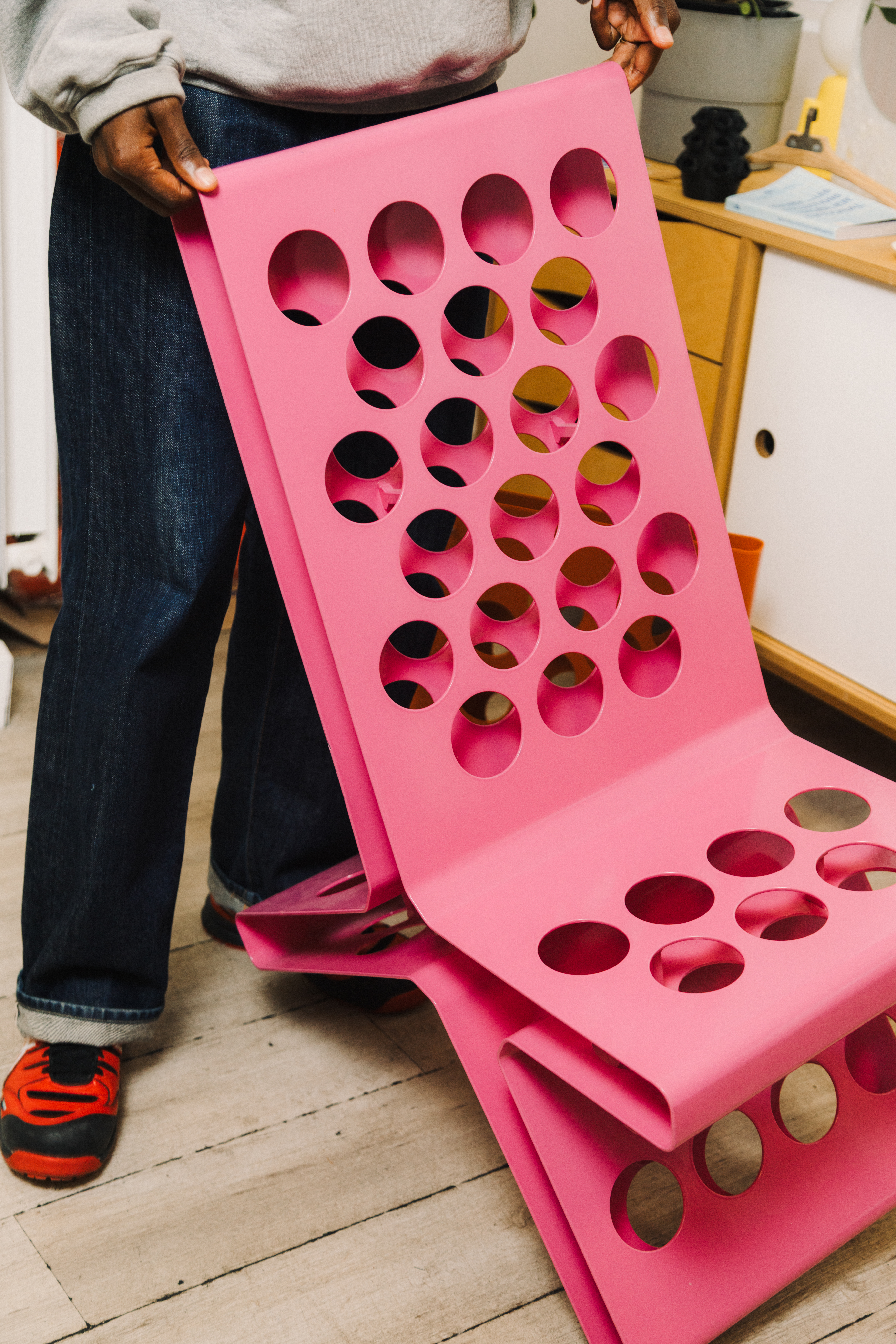
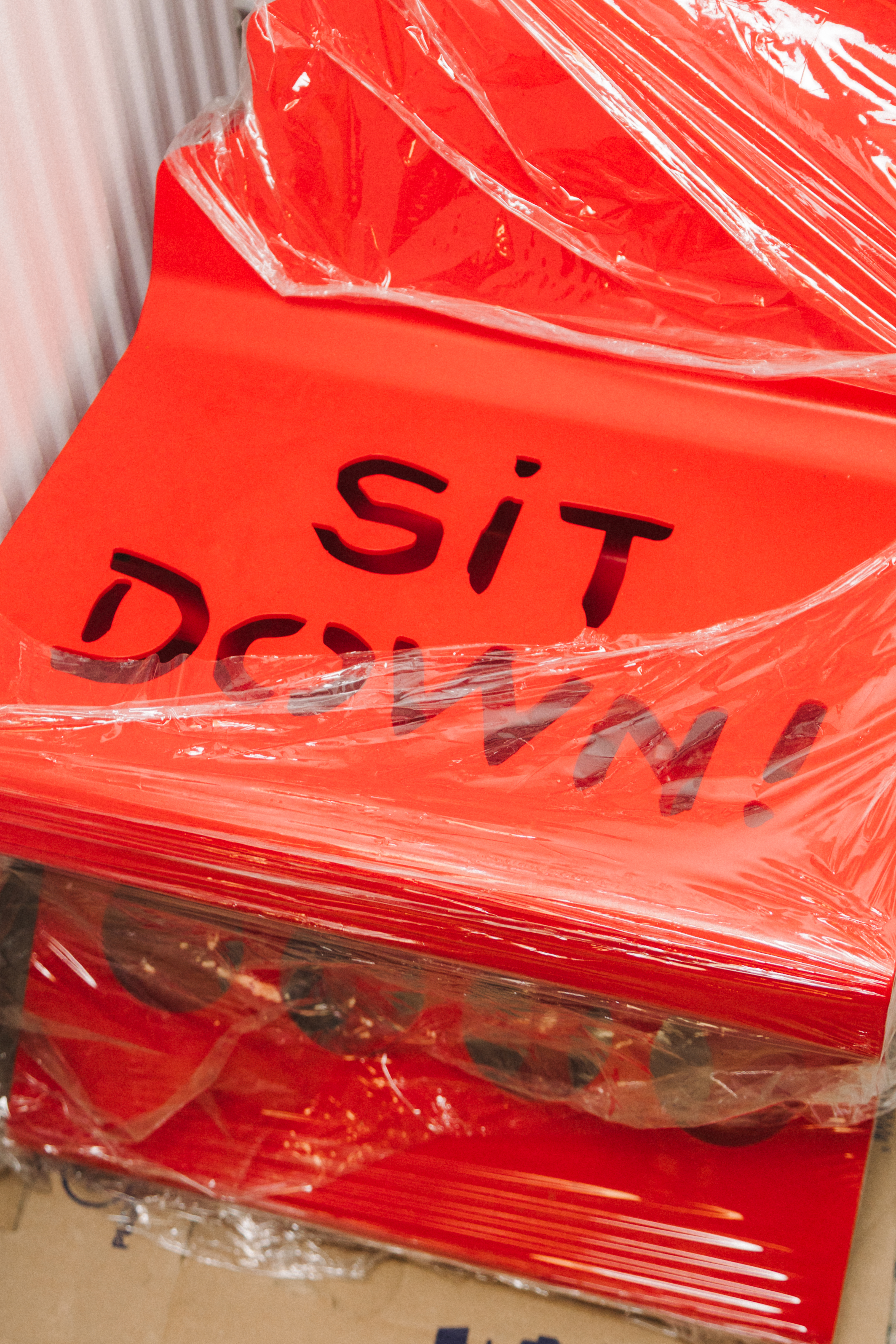
That shared rhythm is visible in the work itself. Their objects balance intuition and structure. Earlier pieces such as the Palabre Chair or Mango Curry explored storytelling and collective symbolism. More recent projects focus on production and accessibility, not as slogans but as concrete design challenges. “We’re less attached to drawing the perfect object,” they explain. “Now it’s more about how things are made, and how they reach people.” At Le 19M, they worked with recycled materials, treating ecology less as a statement and more as a practical condition.
The name itself already suggests that position. In France, the hall is not just an entryway. It is the shared space of the banlieue, often the first public ground for children of immigrants, a place where conversations start, where neighbours meet, where different lives brush up against each other. The haus, borrowed from the Bauhaus, recalls the modernist idea of collective making. Between the two, Hall Haus situates its practice: moving from lived experience to design, and back again.
“At the beginning,” Sammy says, “we wanted to connect popular culture and a more elitist kind of design.” The ambition is still there, but the situation has changed. What started as an intuition, “a seed we planted without knowing what it would become,” has grown through exhibitions, collaborations, and a community that recognises itself in their work.
Zakari puts it more plainly. “At first, we launched with an identity we wanted to defend. It was seen, it was heard. Now the challenge is to make this ecosystem live, to turn those first years into something that lasts.”
Their way of working is built on trust, but also on constant adjustment. Working as four means negotiating roles, knowing when to lead and when to step back. They describe it as a balance, sometimes even as a mirror. There are things they would not necessarily do for themselves, but will do for the group. Not out of idealism, but out of responsibility.
“Hall Haus is an enterprise, not just a studio,” one of them says. “Beyond design, there is responsibility. Each of us carries a part of it.”
Over time, their voices have merged into a kind of ongoing conversation. Ideas rarely stay with one person for long. They circulate, get tested, reshaped, sometimes abandoned. It is less about individual authorship than about finding a shared rhythm, a way of working in which listening is as important as proposing.
That shared rhythm is visible in the work itself. Their objects balance intuition and structure. Earlier pieces such as the Palabre Chair or Mango Curry explored storytelling and collective symbolism. More recent projects focus on production and accessibility, not as slogans but as concrete design challenges. “We’re less attached to drawing the perfect object,” they explain. “Now it’s more about how things are made, and how they reach people.” At Le 19M, they worked with recycled materials, treating ecology less as a statement and more as a practical condition.
Their collective identity does not erase individuality, it sharpens it. Each of them brings a different point of departure, a personal archive of references that quietly feeds into the whole. Abdoulaye mentions the MPC drum machine, an object first designed for accessibility and later transformed by hip-hop producers into a tool of cultural revolution. Sammy traces one of his references back to a formative internship at Younes Design in Marrakech, where he learned how contemporary design could work in dialogue with artisanal heritage. Teddy returns to movement: “Hip-hop taught me creativity through the body. That vocabulary of invention, I learned it there.” Zakari, in turn, looks at systems, at how industries, markets and institutions shape the design field, and how to move within them. The details differ, but the direction is the same: turning experience into method.
They are careful not to define themselves through fixed identity labels. “We don’t pay much attention to outside categories,” Teddy says. “The questioning happens internally.” What they build together already speaks to where they come from, but it also reaches beyond it. “Our condition stands for us,” another adds, “not denying who we are, but making it universal.”
There is also a clear pragmatism in how they position themselves. They are aware that brands and institutions shape the field they operate in, and that working within those structures is part of changing them. This balance between making and navigating systems has become part of their way of working.
They are careful not to define themselves through fixed identity labels. “We don’t pay much attention to outside categories,” Teddy says. “The questioning happens internally.” What they build together already speaks to where they come from, but it also reaches beyond it. “Our condition stands for us,” another adds, “not denying who we are, but making it universal.”
There is also a clear pragmatism in how they position themselves. They are aware that brands and institutions shape the field they operate in, and that working within those structures is part of changing them. This balance between making and navigating systems has become part of their way of working.

When they talk about the future, they imagine Hall Haus both as a brand and as an agency, a studio that continues to take on commissioned work while also developing its own, more accessible line of objects. It is less about getting bigger than about building something that lasts, about giving structure and continuity to what already exists. Their ambition is collective, but grounded in patience and organisation.
The conversation ends much like it began, calm and precise. At one point, Teddy calls it power, “the power of being four.” It feels less like a slogan than a simple observation.
Maybe that is the best way to describe Hall Haus: not just a studio, but a way of working. One built on trust, shared responsibility, and the steady work of making things together.
The conversation ends much like it began, calm and precise. At one point, Teddy calls it power, “the power of being four.” It feels less like a slogan than a simple observation.
Maybe that is the best way to describe Hall Haus: not just a studio, but a way of working. One built on trust, shared responsibility, and the steady work of making things together.
Credits:
Photography: Audrey Mballa
Download PDF:
Get this article in print
21 January 2026
Share: Email, Instagram, WhatsApp